


Bayesian OCR
- Tomson Qin
- May 24, 2019
- 1 min read
Updated: Jul 18, 2019

Bayes Theorem lets us combine what we see and what we don't see. Take location tracking with GPS for example, we can either follow the person every second to find his position, or we can take his position once every minute and use the traffic, distance and historical travels to determine their path, combining the information to find the path traveled using Bayesian Inference.

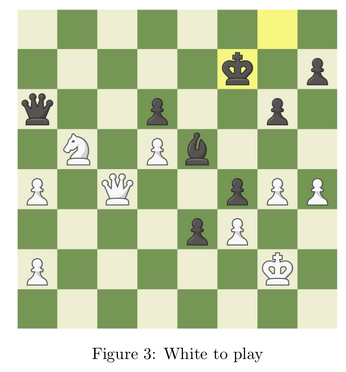

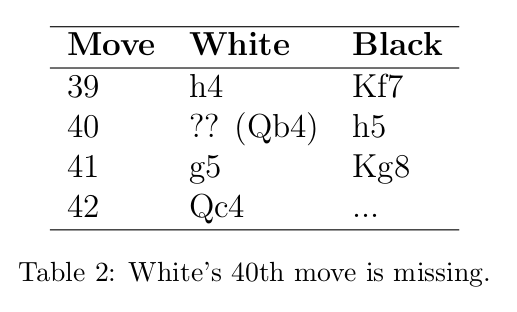
Given a scoresheet containing a missing move. The Candidate moves are:
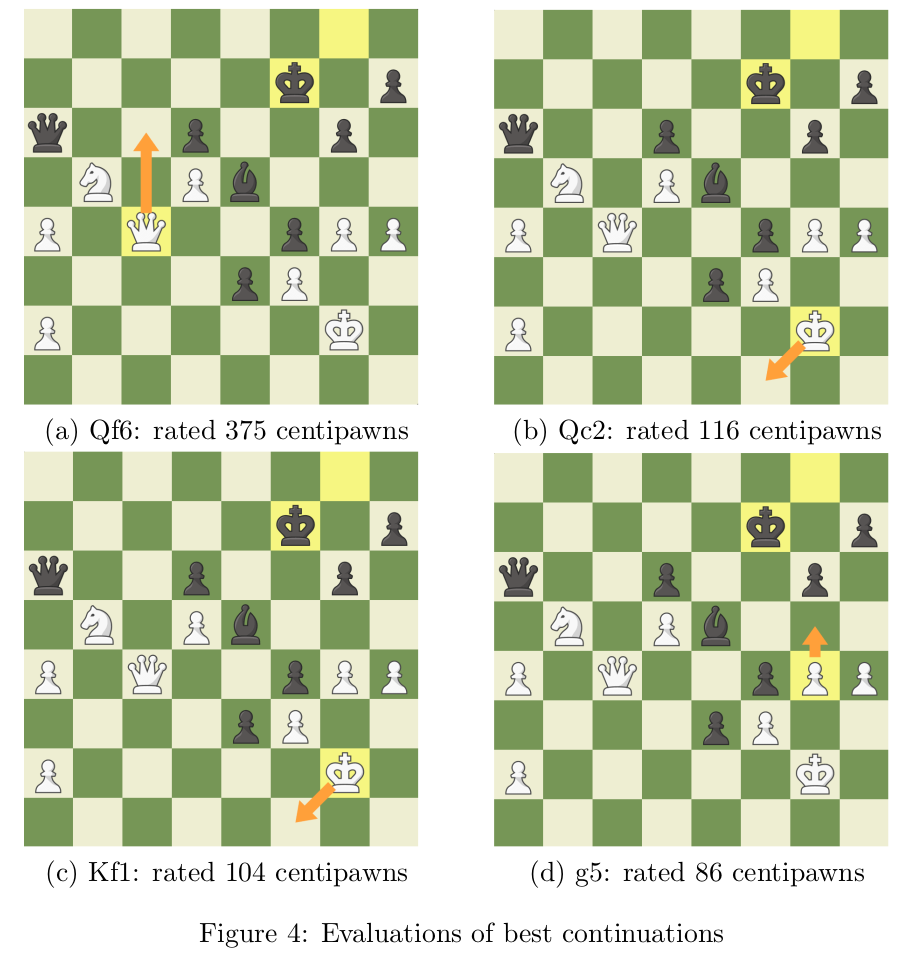
We make use of chess engines which are algorithms that give evaluations for positions in "centipawn" values. The centipawn metric relates the advantage of a position in terms of the pawn.

Given our 5 candidate moves, we can see the probability of each continuation change with more and more future move information. After 4 moves, 3 candidate moves are relegated to being impossible, 2 highly unlikely and 1 move clearly most likely. We see that the most likely Qb4 was indeed the move played.

After 2 moves by each player blue lines dominate our plot, this tells us
we’ve already pinpointed white’s 5th move. After another move by each
player, black and white’s true 5th move is already ranked most likely. In
another 2 moves by each player, we know white and black’s 5th move for
certain conditional on white and black moves being amidst the original candidate moves.


Comments